A Website Chatbot That Fits Your Business and Brand
Narasimhan Vallur | 2026-11-13
Last updated: November 13, 2026
LoftX's business website chatbot lets you shape the language, answers and contact actions visitors encounter on your site.
Your sales team has a way of explaining what you do. They know which terms customers understand, which questions need a careful answer and when to suggest a meeting. Your website chatbot should sound like it belongs to that team.
That is a good reason to choose LoftX. You can shape the assistant around your company's knowledge, tone and preferred actions, giving visitors an experience that feels familiar from the rest of your website.
Two businesses, two ways of speaking
Rent Butter uses its own brand voice in its LoftX chatbot. Docuverus takes a professional approach. Both choices make sense for the businesses making them.
A distinct voice comes through in small decisions. How long should an answer be? Which product terms should the assistant use? How should it invite a visitor to speak with sales? LoftX's organization-specific communication lets those decisions reflect your company.
You don't need a theatrical persona. Often the best starting material is a clear explanation one of your colleagues already gives customers.
Build around the questions before the sales call
Ask your team which questions they answer at the beginning of almost every meeting. Those belong in the website knowledge base.
For an agency, they might concern the services included in an engagement. For a software company, they might concern how a particular feature works. A service provider may need to explain where it operates and how someone requests an estimate.
Write the answers with enough detail to help a visitor decide whether to continue. LoftX uses that business content in its responses. As questions change, your team has a practical place to improve what the assistant says.
Make the invitation specific
“Contact us” leaves the visitor to imagine what happens next. An invitation to discuss a project or see a product demonstration gives them a reason to respond.
LoftX supports configured contact and scheduling actions, including a HubSpot Meetings link inside chat. Choose the action that fits the conversation. Someone evaluating a product may be ready to book; someone with a preliminary question may prefer to leave their details.
The wording deserves the same care as the answers. It should tell the visitor what they are asking for and who will help.
Let the design belong to the site
Colors, naming and welcome content also affect whether the assistant feels like part of your business. The Dexter Hayes implementation shows how LoftX's messenger can reflect a customer's identity.
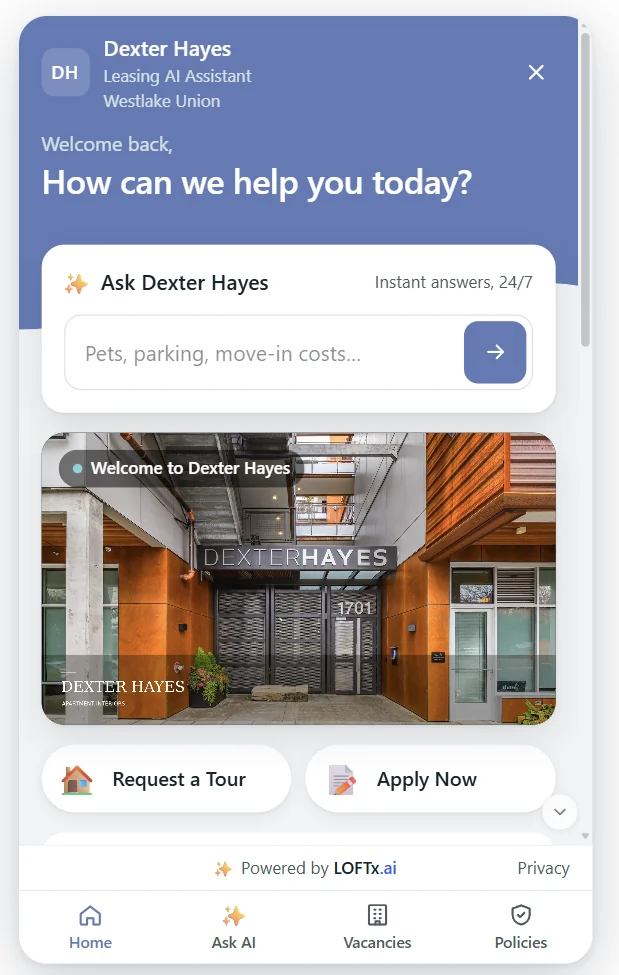
Dexter Hayes uses its own name, colors and welcome content in the messenger.
Your staff remain part of the experience. They can join a conversation live and read what the visitor has already asked. The tone you establish in the assistant can carry naturally into that reply.
If you're planning a business chatbot, gather a few strong customer emails, your common product explanations and the meeting invitation you want visitors to see. Those are useful materials for setting up LoftX with your team.