Notice Approval Workflows for Property Managers
Narasimhan Vallur | 2026-11-10
Last updated: November 10, 2026
A property management notice approval workflow defines who reviews the facts, who authorizes the communication and how the team records what happened. LOFTx.ai gives that process a stronger foundation through configured rent-and-fee checks, notice deadlines and a shared notice log.
For a regional manager, the benefit is practical: staff can bring a proposal and its relevant checks to the approval conversation. The decision no longer has to depend on finding the latest spreadsheet attachment.
Separate three decisions in your notice approval workflow
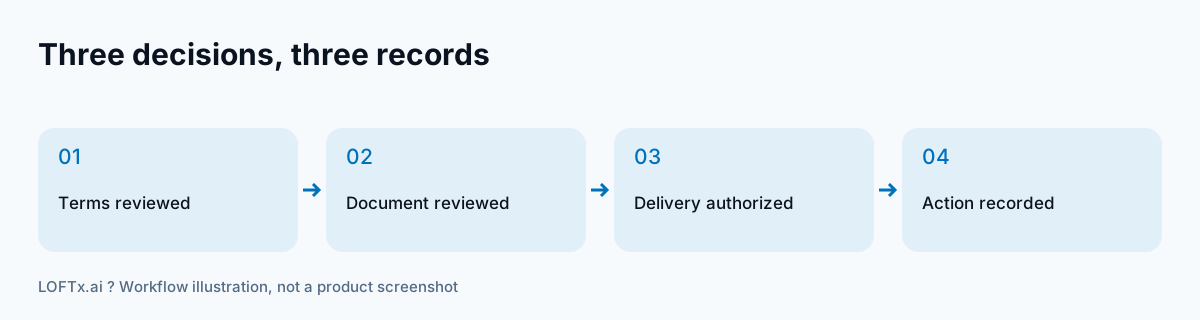
An approved price is not necessarily an approved document, and an approved document has not necessarily been delivered. Organize your process around those three decisions.
| Decision | Reviewer’s question | Evidence to retain |
|---|---|---|
| Proposed terms | Are these the intended charges and dates? | Itemized proposal and configured rule |
| Resident notice | Does this document reflect the authorized terms? | Reviewed document and approval record |
| Delivery | Has the required next action been completed? | Date, method and responsible person |
These are recommended operating responsibilities, not a claim that every organization has an identical multi-level approval configuration in Loftx.
Use Loftx checks before the approval discussion
Loftx’s Compliance AI checks proposed rent and fees against the property’s configured caps. Over-cap proposals cannot be saved as entered. Rent-restricted units can also have a unit-specific ceiling, with a history of changes on the unit.
Those checks help reviewers focus on the decision itself. Instead of approving a total with no context, review the base rent, recurring fees, effective date and applicable configuration together.
For a hypothetical example, a manager requests a higher parking charge after the initial rent proposal was reviewed. Treat that as a change to the complete proposal. Recheck the total and the resident communication before the next action. An earlier approval should not be used as a shortcut around reviewing changed terms.
Define who handles exceptions
Write down who owns unusual leases, missing information and disputes. Decide whether an owner must approve a commercial decision and which staff member reviews the notice wording. Keep internal approval authority separate from the rules governing the resident communication.
In your Loftx demo, ask to see the enabled notice preparation and approval workflow for your organization: how missing fields are surfaced, how reviewers work with a draft and what happens when terms change. Verify these details for your setup rather than assuming a universal automatic approval chain.
Close the loop with the notice record
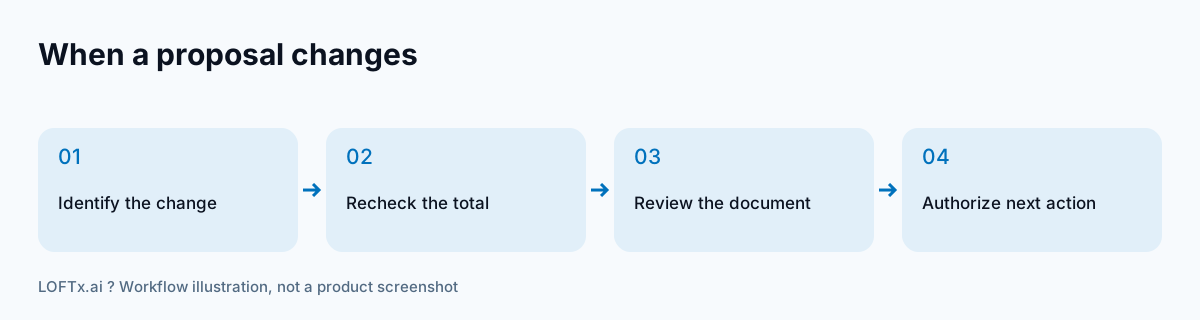
Loftx records the date, method and sender for notices sent through its documented compliance workflow. That helps another team member continue without relying on the original sender’s memory.
Use the notice tracking guide to define the questions your record should answer. For legal form or service questions, use the requirements for the property and notice type. The Washington rent increase notice statute illustrates why the document and delivery step matter separately.
Make approvals easier to review
Bring your current approval process, including one exception, to a Loftx demo. See how configured checks and a clearer notice record can support the people responsible for the decision.